



Four of Swords Tarot Card Meaning: Rest, Recovery & Finding Inner Peace
Table of Contents
- Upright / Reversed keywords
- Four of Swords description
- Symbolism: what’s in the Four of Swords? (1–9)
- What does the Four of Swords mean?
- What does the Four of Swords mean in love?
- What does the Four of Swords mean for career?
- What does the Four of Swords mean for money?
- The Four of Swords as feelings
- The Four of Swords as actions
- Is the Four of Swords a yes or no?
- What does the Four of Swords reversed mean?
- Reversed: love, career and money
- Timing
- Four of Swords card combinations
- Astrology
- Conclusion
Meaning at a glance
Four of Swords: upright and reversed
Upright
The Four of Swords represents deliberate rest after strain. Stepping back can restore the steadiness needed for a later decision. Give recovery a practical place in your plans instead of treating it as something you must earn by becoming completely exhausted.
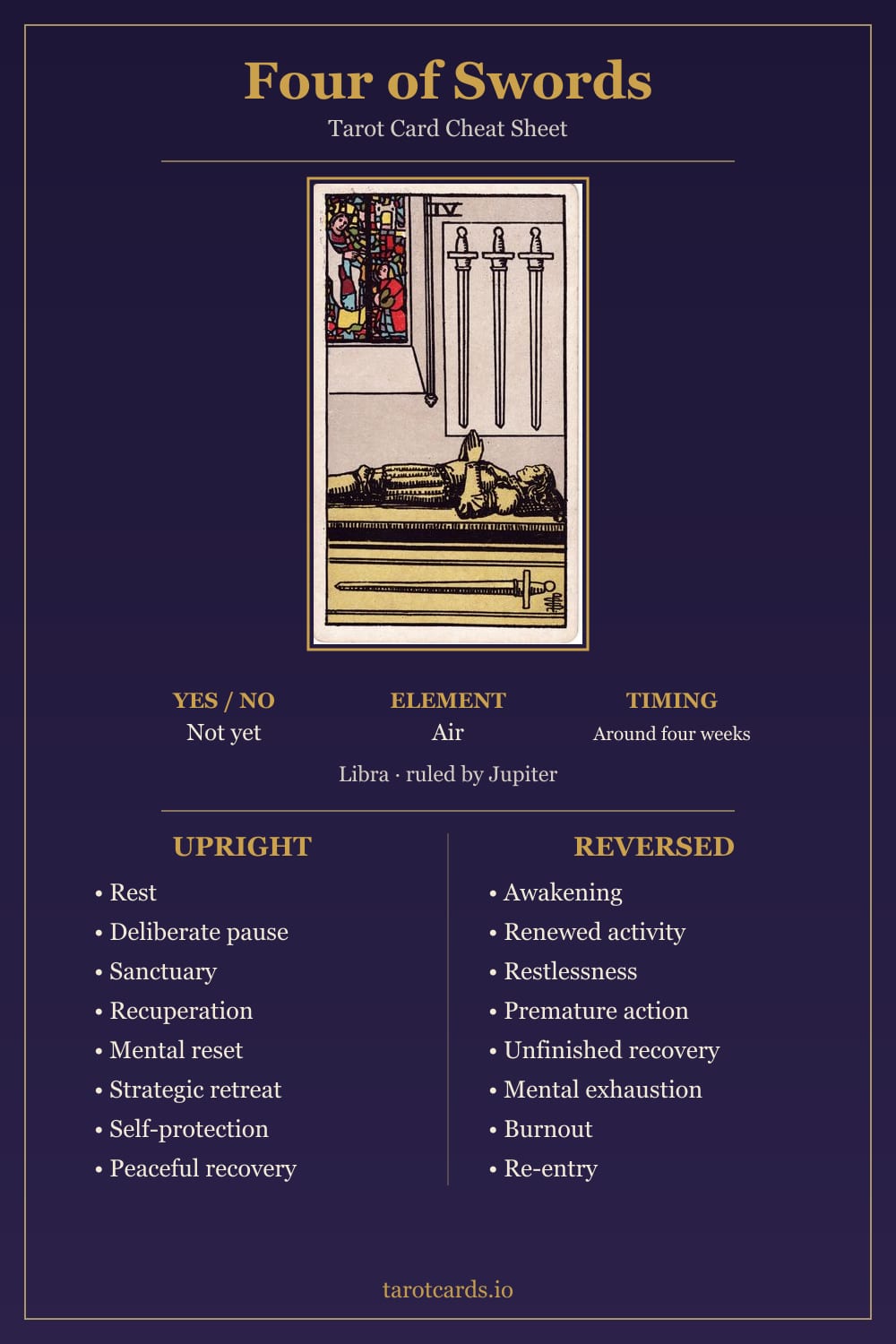
Keywords: Rest, deliberate pause, sanctuary, recuperation, mental reset, strategic retreat, self-protection, peaceful recovery
Reversed
Reversed, the Four of Swords asks whether you are ready to return after a pause or being pushed back before you have recovered. Restlessness can resemble renewed energy. Choose a sustainable pace and notice what support would make re-entry more manageable.
Keywords: Awakening, renewed activity, restlessness, premature action, unfinished recovery, mental exhaustion, burnout, re-entry
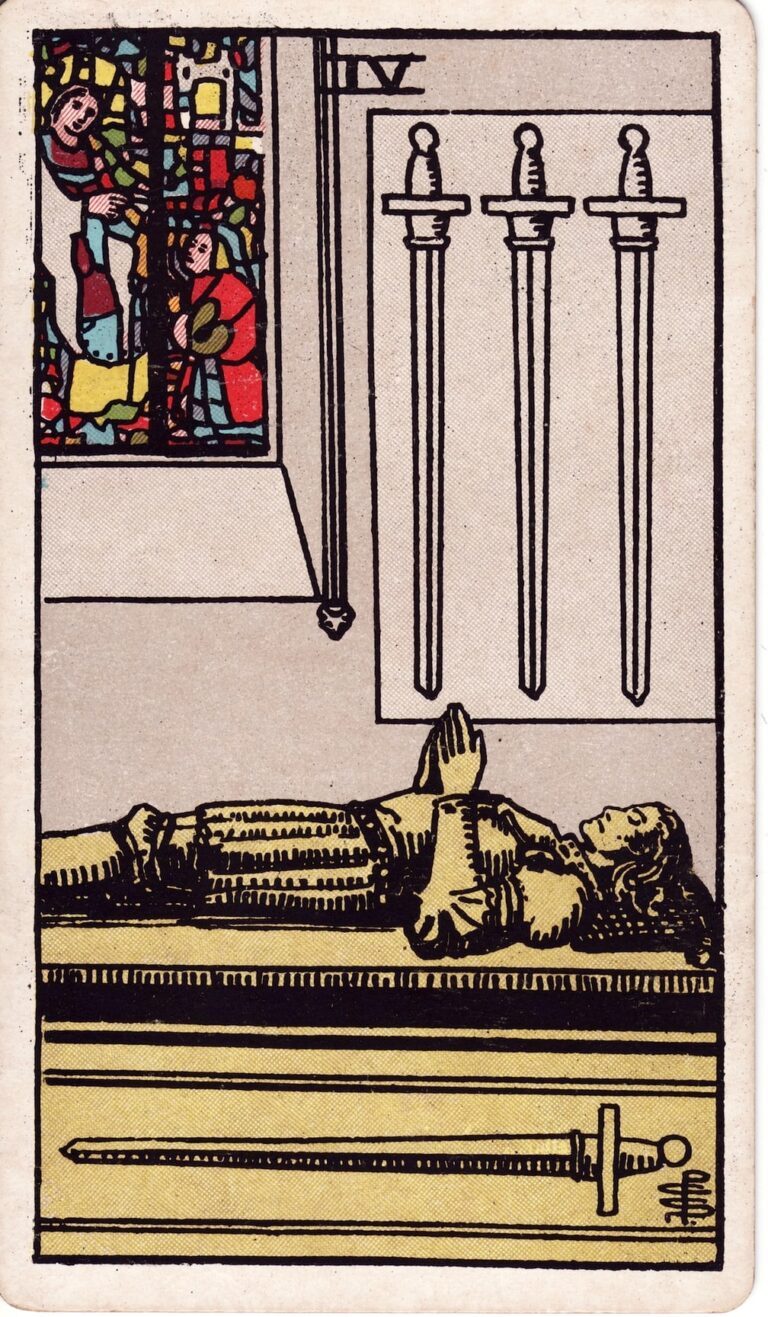
The Four of Swords is the pause you take before strain turns into collapse: deliberate quiet after conflict, mental pressure, or repeated effort has taken too much out of you, so recovery becomes the useful move rather than one more push. Its still figure can look deathlike, but it does not automatically point to illness, hospitalisation, or dead stagnation; it can be read as a prompt for rest and perspective. The armoured figure is a tomb effigy, so returning to action is an interpretation of the card, not something the sculpture literally intends.
Four of Swords description
In the Rider-Waite-Smith Four of Swords, the Roman numeral IV sits above a church interior. A stained-glass window appears high on the left wall with a blessing scene. Three swords hang point-down side by side on the wall to its right.
The central figure is a knight’s effigy lying flat on a golden tomb. He still wears full armour, but his eyes are closed and his hands meet in prayer over his chest. His body runs horizontally across the card beneath the three upright swords on the wall.
A fourth sword is set apart from the others. It is carved horizontally along the side of the tomb, directly beneath the resting knight. The card is almost entirely still: stone walls, fixed blades, folded hands, and an armoured figure held in a long, quiet pose. From top to bottom, the composition moves from IV and the window to suspended swords, armour, tomb, and the laid-down blade.
Also known as: the Four of Épées in the Tarot de Marseille, with some modern decks using Blades. The Thoth deck keeps the name Swords, and in playing-card decks the suit maps to Spades; this guide focuses on Rider–Waite–Smith imagery and interpretation, which may differ from those traditions.
Symbolism: what’s in the Four of Swords? (1–9)
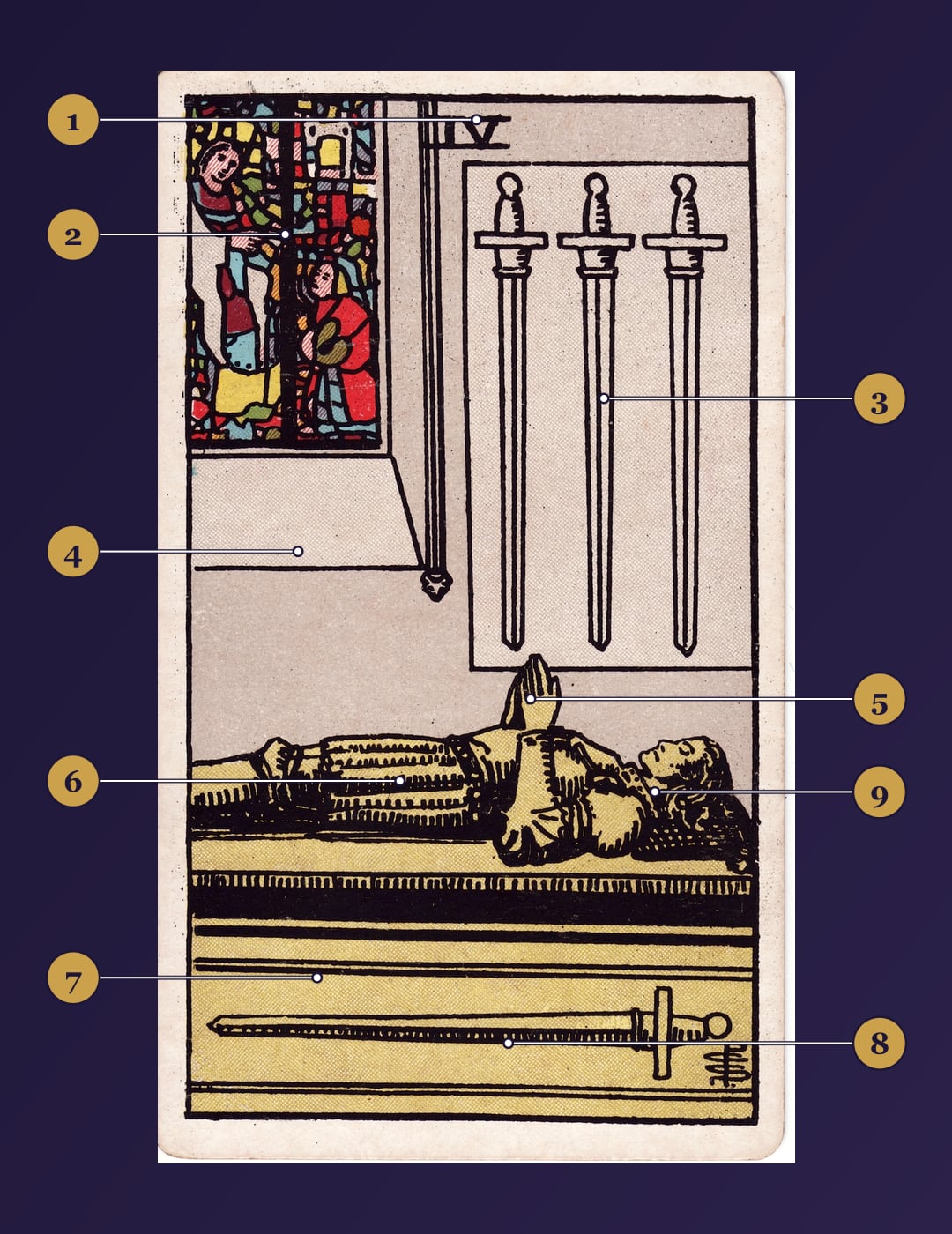
Choose a labelled symbol to highlight its number.
Read the numbered explanations- Roman numeral IV: The first symbol is the IV at the top, bringing stability to the card. Here that stability comes through stopping rather than pushing harder. The pause gives recent experience time to settle, so what has been learned can consolidate before you take up the next challenge.
- Stained-glass blessing scene: The window gives the tomb a sacred setting. In a reading focused on rest, that setting can suggest sanctuary, peace and space away from conflict. This is symbolic interpretation rather than evidence that the pictured knight is recuperating.
- Three swords hanging point-down: These blades remain above the knight, so the old battles have not disappeared. They are suspended. Conflict is paused rather than solved, which is why the card asks for enough recovery to meet what remains with a steadier mind later.
- Church interior wall: The stone church gives stillness a formal setting. This is retreat with structure, closer to a ritual pause than a collapse. The card suggests making rest intentional: give it boundaries, protect the quiet, and treat recovery as something you are meant to do.
- Knight’s effigy with hands in prayer: The effigy looks close to death, yet its message is chosen stillness. The knight’s outward identity and fighting self are laid down for a while, allowing the deeper self to repair without having to perform, defend, or prove anything.
- Full armour still worn: The effigy preserves the knight’s martial identity even in stillness. Symbolically, that contrast can invite you to set aside a defensive role for a time without treating rest as failure. The image itself does not establish a future return to battle.
- Golden tomb: Gold makes the resting place valuable rather than shameful. The tomb does not reduce the knight; it honours the pause. In readings, this detail can mark the moment when you stop treating rest as wasted time and recognise recovery as part of the work.
- Fourth sword along the tomb: Three swords remain on the wall, but one blade has been laid down beneath the knight. This is the weapon he is not using. Its horizontal position turns a sword from an instrument of conflict into a lesson held quietly underneath him.
- Horizontal figure against vertical swords: The knight’s body runs across the card while the three swords rise behind him. That counter-position makes stillness an active choice. Instead of matching the conflict above with more force, he answers it by becoming motionless long enough to recover his strength.
What does the Four of Swords mean?
The Four of Swords means you need a deliberate period of rest before you ask more of yourself. In the Suit of Swords, where conflict, pressure, and difficult thoughts can cut sharply, this card offers the rare instruction to stop. The point is not to escape what happened. It is to recover enough that the next decision is made from steadiness rather than depletion.
In readings, this card usually lands as strategic rest. Think of an athlete’s rest day rather than a sickbed: the pause is chosen because continued effort would make you less capable, not more. The hanging swords show that some problems remain unresolved, while the armour can symbolise the responsibilities you may later choose to resume. For now, the useful move is to reduce noise, protect your energy, sleep, reflect, and allow your mind to settle.
The knight is a sculpted effigy, not a living person pretending to be dead. That image can still be used as a metaphor for stepping away from conflict. Compare it with Nine of Swords, where a figure sits awake in bed in distress: the Four offers formal stillness, while the Nine depicts an unsettled night. The contrast can help you consider what rest would mean in your own situation.
What does the Four of Swords mean in love?
In love, the Four of Swords means taking a deliberate breather so the relationship, or your heart, has room to recover. It is not automatically a breakup card. The emphasis is on lowering the emotional noise for long enough to regain perspective before deciding what comes next.
If you are in a relationship, some space may be healthier than another argument or another attempt to solve everything at once. That can mean quieter contact, time alone, or a shared break from the pressure around you. The bond is not necessarily ending; the card asks both people to stop adding strain while recovery is still needed.
If you are single, this card can suggest pausing the search rather than pushing through dating fatigue. You may need time away from apps, introductions, or the pressure to find someone. Give your heart a period in which nothing has to happen. When you return, the aim is to choose from a calmer place rather than from loneliness, frustration, or exhaustion.
What does the Four of Swords mean for career?
Step back before work pressure turns into burnout: that is the Four of Swords’ career message. If you have been moving from deadline to deadline or carrying the effects of repeated conflict, recovery is the strategy now, not a reward you earn after one more push.
In practical terms, this can look like taking sick leave, using a sabbatical, booking proper time off, or simply refusing the next fight. A project may need to sit for a few days while you regain concentration. You may also need to stop volunteering for extra responsibility until your existing load feels manageable again.
The card does not say that your ambition has disappeared. The knight is still armoured, and the swords remain nearby. Your work is waiting, but you will meet it better after a real pause. Protect time away from messages and demands, let your mind come down from constant alertness, then return when you can think clearly enough to choose your next move instead of reacting to pressure.
What does the Four of Swords mean for money?
For money, this card favours reducing financial activity while you regain a clear head. This is a low-risk, low-noise card: rather than chasing returns, making a large purchase, or reacting quickly to every change, it favours a pause before you commit.
If money worries have made you restless, avoid turning that anxiety into constant spending checks or impulsive decisions. Give yourself a defined period to review what you already know, then leave it alone for a while. The same applies to investments: if your judgement feels tired or pressured, waiting can be the more disciplined choice.
This card can also support a quieter spending pattern. Delay purchases that do not need to happen now, keep cash decisions simple, and let your appetite for risk settle. The goal is not permanent caution. It is to make the next financial move after the mental pressure has eased.
The Four of Swords as feelings
As feelings, the Four of Swords can symbolise a wish for quiet, space or time to reflect. It does not prove that someone’s affection is merely paused or that they intend to return.
If someone has asked for space, respect what they have communicated rather than using the card to decide what their silence means. The useful theme is allowing reflection without assuming that distance is either rejection or a promise of renewed contact.
The Four of Swords as actions
Under the Four of Swords, someone’s actions are likely to be withdrawal, rest, and postponed movement until their mind is calmer. They are likely to go quiet, reduce contact, or put a decision on hold rather than push forward while depleted.
You may see fewer messages, delayed plans, or a period in which they make themselves unavailable to conflict. That does not automatically mean they are closing the door. Under this card, stillness is the action: they are protecting enough space to recover before speaking, deciding, or re-engaging. Rest is one possible interpretation; the card alone cannot establish the reason for someone’s distance.
Is the Four of Swords a yes or no?
The Four of Swords is a gentle no for now: pause first rather than forcing an answer. One useful convention is “not yet” because the card asks for rest, delay, and enough quiet for the situation to settle before anything moves forward.
If your question allows time, treat the answer as postponed rather than permanently denied. Reversed, the card can tilt towards yes as the period of withdrawal ends, although that return is healthier when the rest has actually done its job.
What does the Four of Swords reversed mean?
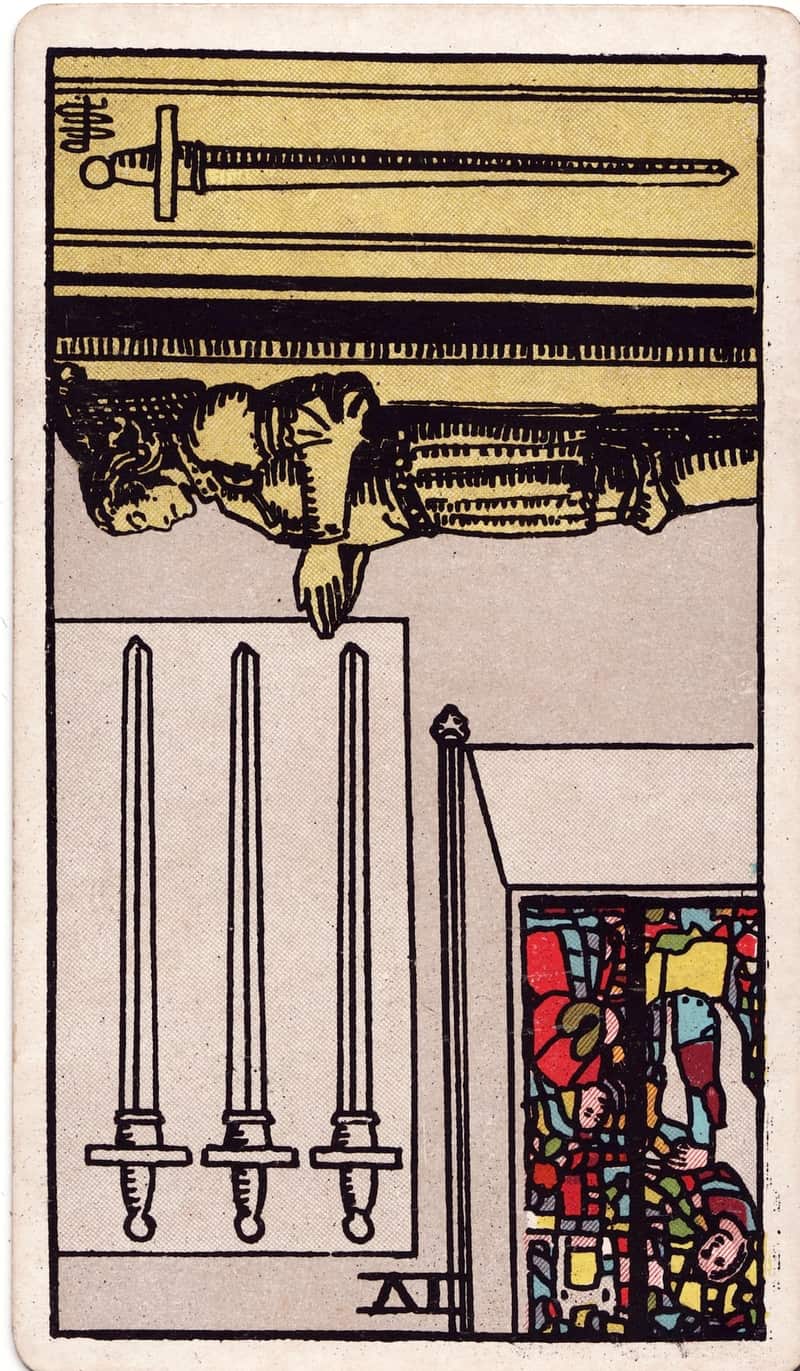
The Four of Swords reversed means the period of rest is ending, but the quality of that return matters. In one reading, you have recovered enough to get up, re-enter the world, and start dealing with what was waiting. Energy comes back, isolation loosens, and the suspended swords can finally be faced with a clearer mind.
In the other reading, the same movement happens too soon. You are restless, tired of waiting, or pulled back into demands before recovery is complete. The mind starts racing again, and action becomes less a sign of readiness than an inability to remain still. This is where the card’s warning about burnout becomes sharpest: if you refuse the pause, the body or mind may force one later.
The reversal is therefore not a simple opposite of rest. It asks what happens when stillness can no longer continue. If you feel restored, begin again without trying to make up for lost time. If you still feel depleted, returning at full speed repeats the pattern that made the Four necessary in the first place.
Reversed: love, career and money
Love
In love, the Four of Swords reversed means a period of emotional distance is ending, or someone is trying to end it before they are ready. If time apart has done its work, communication can restart with more warmth and less defensiveness. Couples who deliberately took a break may find that the connection feels easier once both people have had room to settle.
The harder version is restless re-entry. One person may push for answers, contact, or intensity because silence has become uncomfortable, not because the underlying strain has healed. If you are single, the same applies to dating again: returning can be healthy, but only if the pause restored you rather than merely bored you.
Career
A reversed Four of Swords in career points to returning after a period of withdrawal, with either renewed capacity or unfinished exhaustion. If the break helped, you may feel ready to resume a project, take on responsibility again, or make a change you were too depleted to consider clearly before.
If you are being pulled back before you have recovered, the card is more cautionary. Restlessness can make you say yes to the same demands that drained you, and a busy return can quickly become another burnout cycle. Re-enter gradually where you can, and judge readiness by your concentration and stamina rather than by guilt about being away.
Money
Financially, the Four of Swords reversed means decisions are moving again after a period of caution. You may feel ready to make a purchase, adjust an investment, or deal with a money issue you had deliberately left alone. If the pause brought clarity, acting now can feel measured rather than reactive.
The warning is against swinging from inactivity into panic. Restlessness can produce unnecessary trades, sudden spending, or a rush to fix everything at once. Before you act, check whether your risk appetite has genuinely settled. Re-entry works best when the decision comes from restored judgement, not from discomfort with waiting.
Timing
This site associates Swords with winter. Some readers connect the Four with four weeks, while others read it as a pause of unspecified length. Neither is a reliable calendar: rest, recovery and readiness depend on the actual circumstances.
Four of Swords card combinations
The Four of Swords is an interesting card, and when it appears in your tarot spread, it indicates that you should rest and recuperate to avoid mental burnout. But when the Four of Swords appears with other cards, its meaning can change slightly. Some of the most interesting combinations include:
The Four of Swords and Three of Swords
The Four of Swords and Three of Swords are very interesting cards in the Suit of Swords. When they appear together, the pairing can suggest making room for grief and rest after a painful experience. Meditation may suit some people, but it is not a required condition for healing.
The Four of Swords and The High Priestess
The High Priestess focuses on the power of intuition, while the Four of Swords is a card of much-needed rest. When both cards appear in your reading, they suggest trusting your intuition and resting when your mind and body are telling you that this is what they need.
The Four of Swords and King of Cups
King of Cups is a court card associated here with emotional steadiness. When it appears with the Four of Swords, the two cards reinforce powerful messages about taking control of your emotions so difficult situations are easier to manage. King of Cups can add a theme of patient emotional support; the pairing cannot establish how quickly someone will recover from trauma.
Astrology
In the Golden Dawn’s Book T, the Four of Swords is associated with Jupiter in Libra. Libra’s balance and Jupiter’s expansive symbolism offer one esoteric way to consider rest after conflict.
These associations are part of that reading tradition, not a medical explanation or a promise of healing. The practical emphasis remains on considering what a sustainable pause would look like in your circumstances.
Conclusion
The Four of Swords asks you to choose rest while it is still a choice, laying down the fight long enough for your mind and body to repair. Upright or reversed, the useful distinction is simple: are you recovering because you made space for it, or returning because you can no longer tolerate the pause?
Take that distinction into your next reading and see what your quiet period is preparing you to face.
Reading approach: Use these Rider–Waite–Smith interpretations to explore the question and context. A card does not establish another person’s feelings or a future outcome; check practical decisions against observable facts.
Curious about what lies ahead?
Get a free AI tarot reading and explore guidance designed just for you. Discover the messages the cards have to share and gain insight into your path.
Get a free tarot reading


